Background Info For Chianti Wine Tasting
If at some time during your Florence Tuscany vacation, you’re thinking of a going on a Chianti wine tasting, here’s some background information which you’ll certainly find useful before you go.
Chianti is one of the oldest and well-known wines of Italy. In the 1960’s and 70’s it was known as the wine in the wicker basket, then the 1991 film “The Silence of the Lambs” gave it a name drop when Hannibal Lector stated “a census taker once tried to test me. I ate his liver with some fava beans and a nice Chianti.”
Where is Chianti?
The Chianti geographic region is situated in central Tuscany which itself is central Italy, and lies between the provinces of Florence to the north and Siena to the south. It covers an area of about 270 square miles, and the wine has been around for a very long time. The first notarial document that officially mentions the name Chianti indicating the wine that was being produced in the geographic area of the same name dates back to 1398.
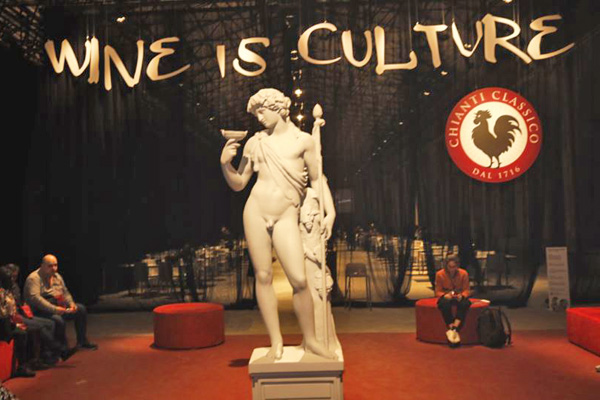
In the centuries that followed, Chianti’s fame grew to such an extent that there was a need to establish rules and controls for its production and marketing. So, on September 24, 1716, the Grand Duke of Tuscany Cosimo III de’ Medici issued a proclamation which defined the boundaries for its production.
 Many events and variations have subsequently taken place over the centuries, and here is a full timeline of Chianti history.
To keep this article short, I’ll just mention three of the most important dates which I explain in detail during my wine tasting in Chianti tours.
1872
Bettino Ricasoli – the second Prime Minister of United Italy (1861) – perfected the “recipe” with the varieties and percentages recommended for the ideal wine to accompany his meals and the food of the time which relied heavily on the use of salt as a preserve.
1924
At the beginning of the twentieth century, the name Chianti was so famous that it became synonymous with Tuscany and Italian wine in the world. The demand was so high that a growing number of producers in central Tuscany started to market wines with the wording “Chianti-style”, despite the fact that they were not made with grapes and musts that came from the original area.
This created a need in the official producers to protect their specific identity and economic interests. Therefore, on May 14th, 33 local wine growers founded the Consortium for the Defense of the Typical Wine of Chianti in the town of Radda in Chianti. It was the first Consortium in the history of Italian wines.
1932
The problems relating to producers in central Tuscany but outside of the official production zone calling their wines Chianti continued, so another solution was needed. The solution they came up with, was to add another seven sub-zones to the original production area. They then defined the wines from the added-on zones as Chianti, and the wines from the original production zone Chianti Classico. These distinctions are in force to the present date.
What Are Chianti & Classico made from?
The predominant grape variety in Chianti is Sangiovese. This must constitute at least 70% for Chianti, and 80% for Chianti Classico. The wines may also be 100% Sangiovese. The other 20% is usually Canaiolo, Colorino, Merlot or Cabernet Sauvignon. Chianti Classico is produced in three styles.
· Annual wines, which require a minimum of 12 months aging, and are usually not barrel aged.
· Riserva, which requires a minimum 24-month aging period. A period of barrel aging is optional, but almost always done.
· Gran Selezione, which is made from 100% selected Sangiovese grapes and requires a minimum 30 months aging. Part of the aging period will be in the barrel, which again is optional, but always done.
What can I expect from a glass of Chianti?
Chianti and Chianti Classico are a ruby red color, tending towards garnet with aging. This is more noticeable with the Reserves and Grand Selections as they pass the five year mark. The aroma of the young annual wines (which are generally not barrel aged), is characterized by notes of cherry, raspberry and hints of violet. The Reserves and Grand Selections which are always barrel aged, add nuances of spice, leather, tobacco, and damp earth.
On the palate, annual Chianti is fresh with defined but balanced tannins and a mouthwatering acidity. The Reserves and Grand are more structured, with distinct velvety tannins, great balance, and a very persistent finish.
What foods can I pair with Chianti?
Chianti is quite a versatile wine made to be consumed with rich, salty, fatty foods. On my wine tours from Florence, I often suggest a bacon and cheese hamburger. Now this isn’t what you’ll read on the bottle, or on any expert’s site, and it may seem a joke. However, it includes three typical foods that will make your every sip velvety and round. Meats, especially salted meats like sausage, bacon and cold cuts. Also, barbecues, stews, rich pasta sauces and aged cheeses Cheddar and Parmigiano. But beware, don’t add a sweet sauce of any kind. This will exponentially emphasize the tannins and acidity making the wine almost vinegar like. Chianti was never made, and isn’t made to be consumed with sweets. Young annual Chianti’s pair surprisingly well with curry…it’s something I’ve tried.
Should Chianti be aired?
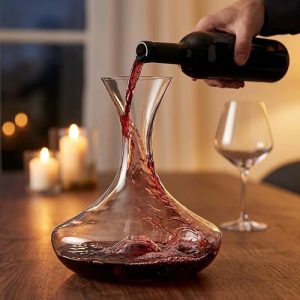
Yes definitely. A young bottle of Chianti should be opened at least two hours before drinking. If those two hours spent are in a decanter, even better. Reserves and Grand Selections will benefit from double these times. If you don’t finish it, just pour it back into the bottle without taking out the air. My favorite Chianti is always a half bottle from the day before. It aquires an impressive degree of smoothness.
What is the serving Temperature of Chianti?
Chianti is ideal at temperatures just a tad below room temperature. So, for a young annual wine, the ideal temperature is 15/16°C (59/61°f) and about 18°C (64.5°f) for a Reserve or Grand Selection.